
Programs
Three integrated pillars
Carbon Bank's operating model is built on three interconnected pillars — each reinforcing the others to create durable restoration and lasting impact.
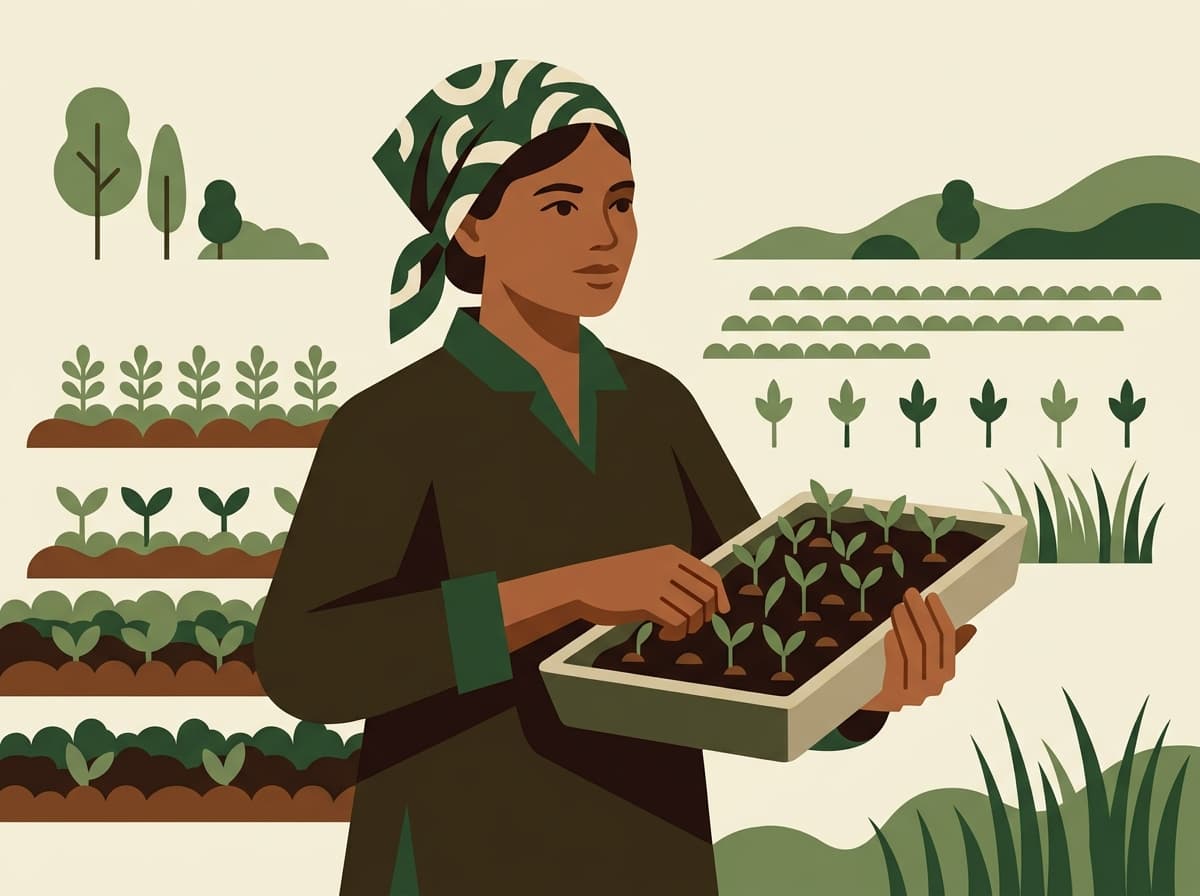
Land Restoration
From degraded liability to productive asset
Carbon Bank targets degraded and underutilised land that has lost its productivity and economic value. We apply soil improvement, establish regenerative vegetation systems using grasses, legumes, seedlings and commercial biomass crops, and embed the land in a commercial operating model that creates ongoing economic incentive for maintenance.
Current: ~11.15 hectares across operating sites
Key activities
- Soil assessment and amendment
- Soil pH and nutrient balance restoration
- Grass and legume planting
- Biomass crop establishment
- Vegetation cover management
Outcomes
- Improved soil functionality
- Increased productive land cover
- Biomass yield for commercial sale
- Land that remains productive after project funding ends
Women's Livelihood
Paid work. Practical skills. Formal supply chains.
Rural women are integrated as paid operators, workers and suppliers — not as a separate social programme, but as part of Carbon Bank's operating infrastructure. Over two years, Carbon Bank plans to engage 100 low-income rural women through phased, paid roles. Selected participants progress into recurring workers, team leaders and local suppliers.
Target: 100 unique women over 2 years
Key activities
- Nursery and seedling production
- Land preparation and cultivation
- Crop maintenance and harvesting
- Biomass processing and quality control
- Warehouse operations and inventory
- Local supply and buyer fulfilment
Outcomes
- Practical agricultural skills
- Recurring income opportunities
- Access to formal agricultural supply chains
- Pathway to team-lead and supplier roles
Commercial Biomass & Nursery
The revenue engine that sustains restoration
Carbon Bank's commercial operations generate revenue from forage and biomass sales, seedlings and planting materials, contract cultivation, primary processing, storage and land-management services. Target customers include livestock farms, feed producers, agricultural companies, cooperatives and institutional buyers. Sales are developed through direct B2B transactions, recurring supply agreements and institutional partnerships.
Current: 3 B2B transactions completed
Key activities
- Forage and biomass production
- Seedling and planting material cultivation
- Contract cultivation services
- Primary processing (cleaning, sorting, drying, packaging)
- Storage and inventory management
- B2B sales and supply agreements
Outcomes
- Recurring revenue from commercial output
- Economic incentive to maintain restored land
- Reliable local supply for buyers
- Operating infrastructure for continued expansion
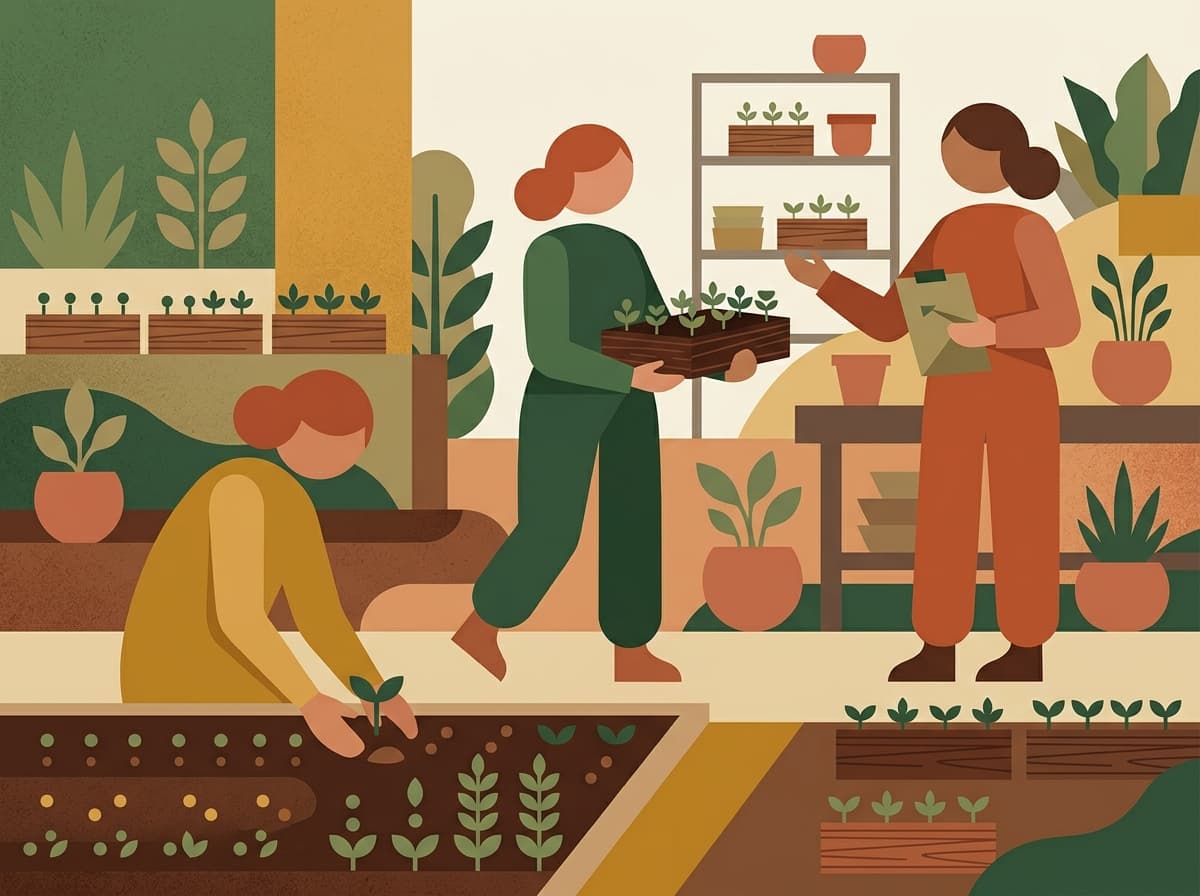
Women-powered operations
The people behind every hectare restored
Women are part of Carbon Bank's business infrastructure, not a separate social programme. They are the hands that plant, tend, harvest, process and deliver — building practical skills, recurring income and a pathway to higher-value roles.