
Our model
An integrated value chain that makes restoration pay
Carbon Bank's model integrates land preparation, soil improvement, nursery development, cultivation, harvesting, primary processing, storage, and buyer fulfilment. Each step generates revenue and creates the economic incentive to maintain restored land.
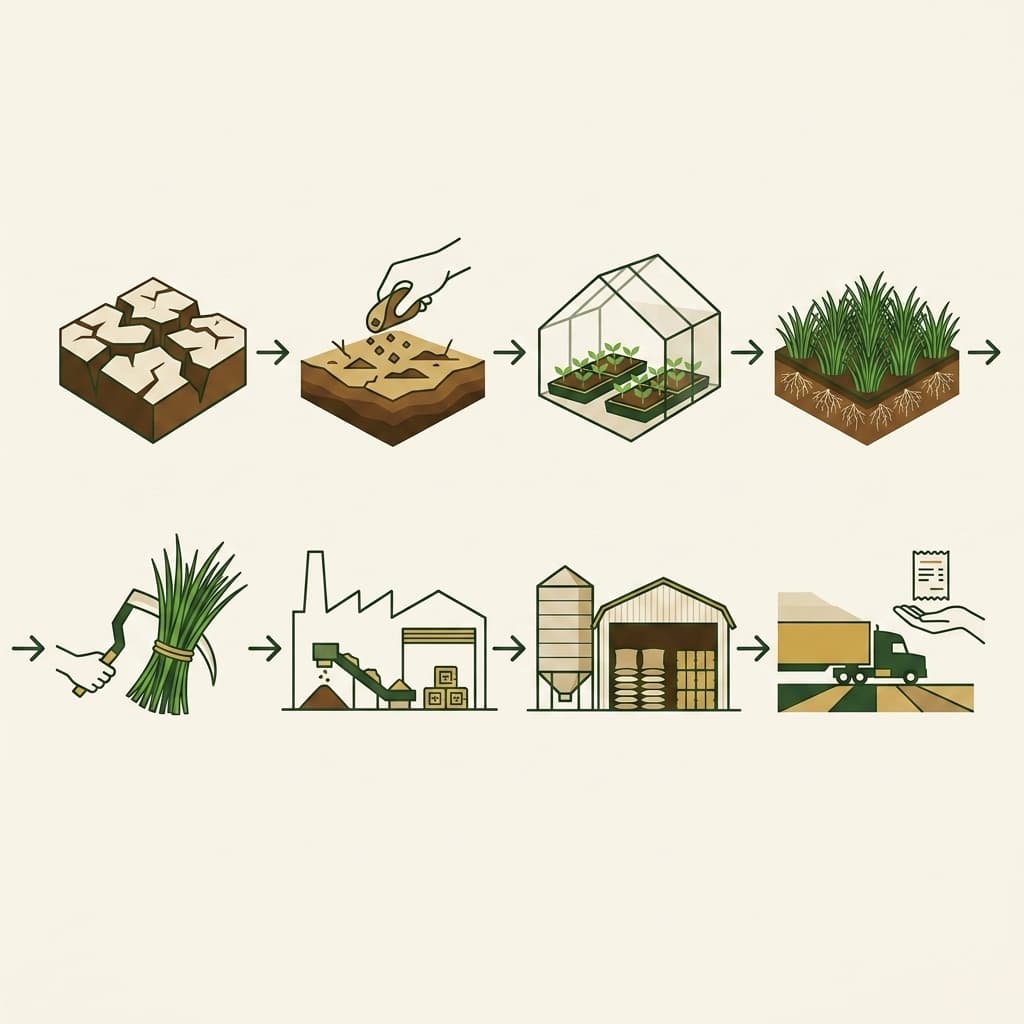
Land Preparation
Assess degraded sites, establish land agreements with owners, and prepare ground for soil improvement and planting.
Soil Improvement
Apply soil amendments and organic matter to restore pH, nutrient balance and microbial function — the foundation of everything that follows.
Nursery Development
Establish in-house nurseries for grasses, legumes and seedlings, reducing input costs and ensuring propagation quality.
Cultivation
Plant and maintain regenerative forage systems, biomass crops and planting materials across rehabilitated hectares.
Harvesting
Harvest mature biomass and forage at optimal timing, managed by trained local workers.
Primary Processing
Clean, sort, dry and package raw materials to buyer specifications.
Storage
Maintain quality through proper storage and inventory management.
Buyer Fulfilment
Deliver consistent, quality-assured biomass and planting materials to livestock farms, feed producers and agricultural enterprises.
Why this model is durable
Unlike short-term restoration projects, Carbon Bank embeds land recovery in a commercial value chain. Biomass and nursery revenue creates a recurring economic incentive to maintain and expand restored land — after grant funding ends.